


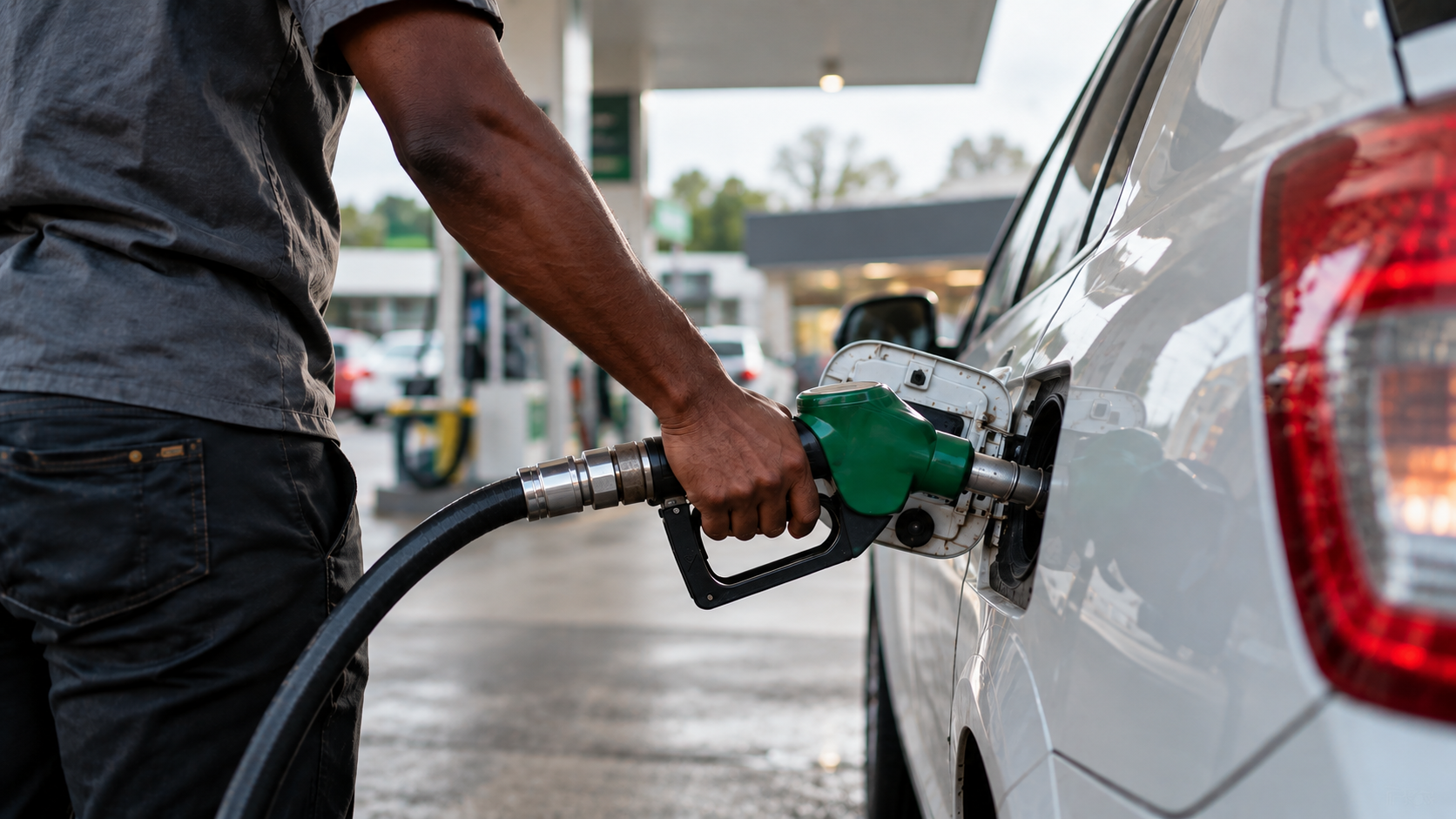
R30 a litre changes the way you look at a fuel gauge. A half-empty tank suddenly feels more expensive, the school run costs a little more, and that weekend drive becomes something you think about twice.
As of 7 October 2026, South Africans using 95 unleaded petrol are paying R30.25 a litre inland, after the price jumped by R3.33 in a single month. At the coast, 95 petrol now costs R29.38 a litre, while the wholesale price of some diesel grades has moved above R32 a litre. It is the first time the inland petrol price has crossed the R30 mark.
For motorists, the impact is obvious. For the economy, the story is much bigger. Petrol and diesel sit underneath an extraordinary amount of economic activity. They move people to work, trucks between warehouses, food from farms to supermarkets and parcels from distribution centres to front doors. Fuel also affects airlines, mines, manufacturers and construction businesses long before the cost eventually reaches the person standing at the till.
That is why R30 petrol is more than an unpleasant number on a filling-station sign. For traders and anyone following markets, it is the beginning of a chain reaction worth understanding.
How did we get to R30?
South Africa did not suddenly start using dramatically more petrol in October. The biggest part of the latest increase came from somewhere much further away.
During the fuel-price review period used for the October adjustment, the average Brent crude oil price climbed from US$87.89 to US$101 a barrel. The Department of Mineral and Petroleum Resources attributed that increase to continuing US-Iran tensions, uncertainty around oil flows through the Strait of Hormuz, higher shipping costs and falling inventories. That matters enormously for South Africa because we import crude oil and refined petroleum products at international prices. When the world price rises, we cannot simply decide that South African fuel should cost less.
The rand usually has an important role too. A weaker currency makes dollar-priced oil more expensive locally, while a stronger rand can provide some relief. This time, however, the currency barely moved during the review period, strengthening on average from R16.213 to R16.212 to the dollar. That tiny improvement shaved only a fraction of a cent from the fuel calculation. In other words, the rand behaved relatively well. Oil simply overwhelmed it.
The petrol station is only the first stop
The most visible impact of a fuel increase is what happens when somebody fills a car. The less visible impact starts when a business fills a truck. Almost everything we buy has travelled. Fresh produce needs to move from farms and packhouses to distribution centres and supermarkets. Online purchases have to reach warehouses and then homes.
Building materials need to get to construction sites. Restaurants rely on suppliers arriving at their doors. When diesel becomes substantially more expensive, businesses have to absorb some of that cost, find efficiencies elsewhere or eventually pass part of it on.
South African Reserve Bank Governor Lesetja Kganyago explained the basic chain earlier in 2026: an oil shock pushes up petrol and transport costs quickly, while the wider inflation effects can arrive later. That delay is important. The R30 petrol price appears overnight. The rest of the economy does not adjust nearly as fast.
Your grocery bill may eventually notice
Food is a good example. A tomato does not use petrol, but almost every stage of getting that tomato onto a supermarket shelf uses energy somewhere. A farmer may use diesel-powered machinery, fertiliser has its own energy-intensive production chain, trucks move the crop, refrigeration keeps it fresh and retailers run large distribution networks.
The Reserve Bank’s September 2026 Quarterly Bulletin showed how energy shocks were already working their way through the South African economy before the October increase. Consumer fuel inflation reached 34.3% in June 2026, its highest level since September 2022, while the surge in fuel and fertiliser costs had also pushed up producer prices in parts of the economy.
Fortunately, food inflation itself has recently been unusually subdued because of strong harvests and more stable meat prices. The SARB said in September that food inflation was at its lowest level since 2010. That provides some cushioning, but another large jump in fuel costs adds pressure to a system that still has to move food around the country.
Nobody knows precisely how much of October’s fuel increase will ultimately appear in individual food prices. What we do know is that the cost base has gone up.
Then there is the money households do not spend elsewhere
There is another economic effect that receives less attention. Most households have a finite amount of money available each month. If getting to work, taking children to school or running a car suddenly costs more, that money has to come from somewhere.
For some households, the difference may come out of savings. For others it might mean fewer restaurant meals, delaying a purchase, cutting entertainment spending or reconsidering a trip. That is where petrol prices can start becoming relevant to companies that have nothing to do with fuel.
Retailers, restaurants, tourism businesses and other consumer-facing companies all depend, to varying degrees, on disposable income. A petrol shock effectively takes a little more money out of that pool before the consumer reaches them.
This does not mean spending immediately collapses every time fuel rises. Consumer behaviour is much messier than that.
Higher-income households may barely change their habits, while households with longer commutes or tighter budgets can feel the increase immediately. The effect is uneven, but markets care about that unevenness because different businesses experience the same economic shock in very different ways.
For companies, R30 petrol can become a margin problem
Imagine two businesses. One sells software online. The other operates a fleet of delivery trucks. The same fuel-price increase reaches them very differently. Businesses in logistics, transport, agriculture, mining, manufacturing and other fuel-intensive industries can see costs rise directly. Retailers may feel the effect through distribution expenses and suppliers.
Airlines are more exposed to jet fuel than petrol itself, but the same global oil shock sits behind both.
The question for a company then becomes how much of the higher cost it can absorb and how much it can pass on to customers without hurting demand. That is why traders pay attention to energy shocks even when they are not trading an oil company.
Higher oil can affect expected margins, consumer spending and inflation across a surprisingly broad range of businesses.
It is also why the same oil move can create very different conversations around different sectors. An energy producer and a delivery business do not look at US$100 oil in the same way.
Petrol can reach interest rates too
The fuel story becomes more important to financial markets when it starts affecting inflation. As at August 2026, South Africa’s headline inflation rate was 4.4%. At its September meeting, the Reserve Bank warned that the renewed fuel shock had worsened the inflation outlook and said it expected headline inflation to rise above 5% later in 2026 and into early 2027. On 23 September, the Monetary Policy Committee raised the repo rate by 25 basis points to 7.25%.
The Reserve Bank’s concern is not simply that petrol gets more expensive once. Central banks can do very little about the international oil price itself. What policymakers watch closely is whether one price shock starts spreading.
Transport costs rise, businesses lift other prices, employees expect higher inflation and wage demands adjust. Economists call these second-round effects, but the concept is straightforward: the original shock starts changing prices elsewhere.
The SARB’s Monetary Policy Review published on 6 October 2026 said inflation is expected to remain above 5% until the second quarter of 2027 and highlighted persistent fuel, food and administered-price shocks as risks that could become embedded in inflation expectations. That creates a connection from the petrol pump all the way to the bond and currency markets.
Why traders watch the pump
For traders, R30 petrol provides information about several moving parts of the economy at once. It tells us something about global oil markets and geopolitical risk. It affects expectations for South African inflation and therefore the interest-rate outlook. It can influence company costs, household disposable income and economic growth, while also affecting South Africa’s import bill because the country pays more for energy coming from abroad.
The Reserve Bank’s September Quarterly Bulletin showed that the sharp rise in crude oil and refined-product prices had already contributed to a deterioration in South Africa’s terms of trade during the second quarter of 2026. The value of imports rose much faster than exports, with higher energy costs playing a significant role.
For the rand, the picture is rarely as simple as “higher petrol equals weaker currency”. Exchange rates respond to global markets, interest rates, commodity exports, risk appetite and many other forces.
But a larger energy import bill forms part of that broader picture. This is why markets rarely look at a fuel-price increase as an isolated consumer story. It connects into inflation, interest rates, corporate earnings and growth expectations.
R30 is psychological as well as economic
There is something else about the current increase that spreadsheets do not quite capture. Round numbers matter to people. R29.87 may be economically almost indistinguishable from R30.02, but the second number feels different. Crossing R30 makes the increase visible in a way that a few cents either side does not.
It matters because expectations influence behaviour.
Consumers who believe prices are getting out of control can become more cautious. Businesses expecting higher costs may start adjusting prices or delaying spending. Workers may think differently about wage increases.
This is one reason the Reserve Bank pays such close attention to inflation expectations. A fuel shock becomes harder to contain when people start assuming that higher prices will simply keep spreading. R30 therefore has symbolic weight even beyond the arithmetic.
What happens from here?
Oil prices will continue moving, the rand will continue moving and South Africa’s regulated fuel price will continue being recalculated every month. R30 does not automatically become a permanent new floor. Fuel prices have moved sharply in both directions before, and a meaningful decline in global oil prices could eventually bring relief.
The economic effects, however, take longer to work through. Transport companies renegotiate contracts, retailers reassess costs, households adjust budgets and the Reserve Bank watches incoming inflation data to see how much of the shock spreads.
That is what makes the current moment worth watching. As of 7 October 2026, South Africa has crossed a fuel-price level it has never seen before, at the same time that economic growth is already subdued and interest rates have recently moved higher. For someone standing at the pump, the story is R30.25 a litre. For the market, the story is everything that happens after the tank is full.









