A holiday can feel like one of the most personal decisions we make. You choose a destination, book a flight, find somewhere to stay and decide what you want to do when you get there.
But multiply that decision by millions of people moving around the world every day, and something much bigger begins to happen.
Airlines buy more fuel, hotels fill rooms, restaurants get busier, airports expand, local businesses gain customers and foreign money enters domestic economies. Travel does not simply move people. It moves money.
And on a global scale, that makes tourism far more than a lifestyle industry. It becomes an economic force.
A holiday has a surprisingly long economic trail
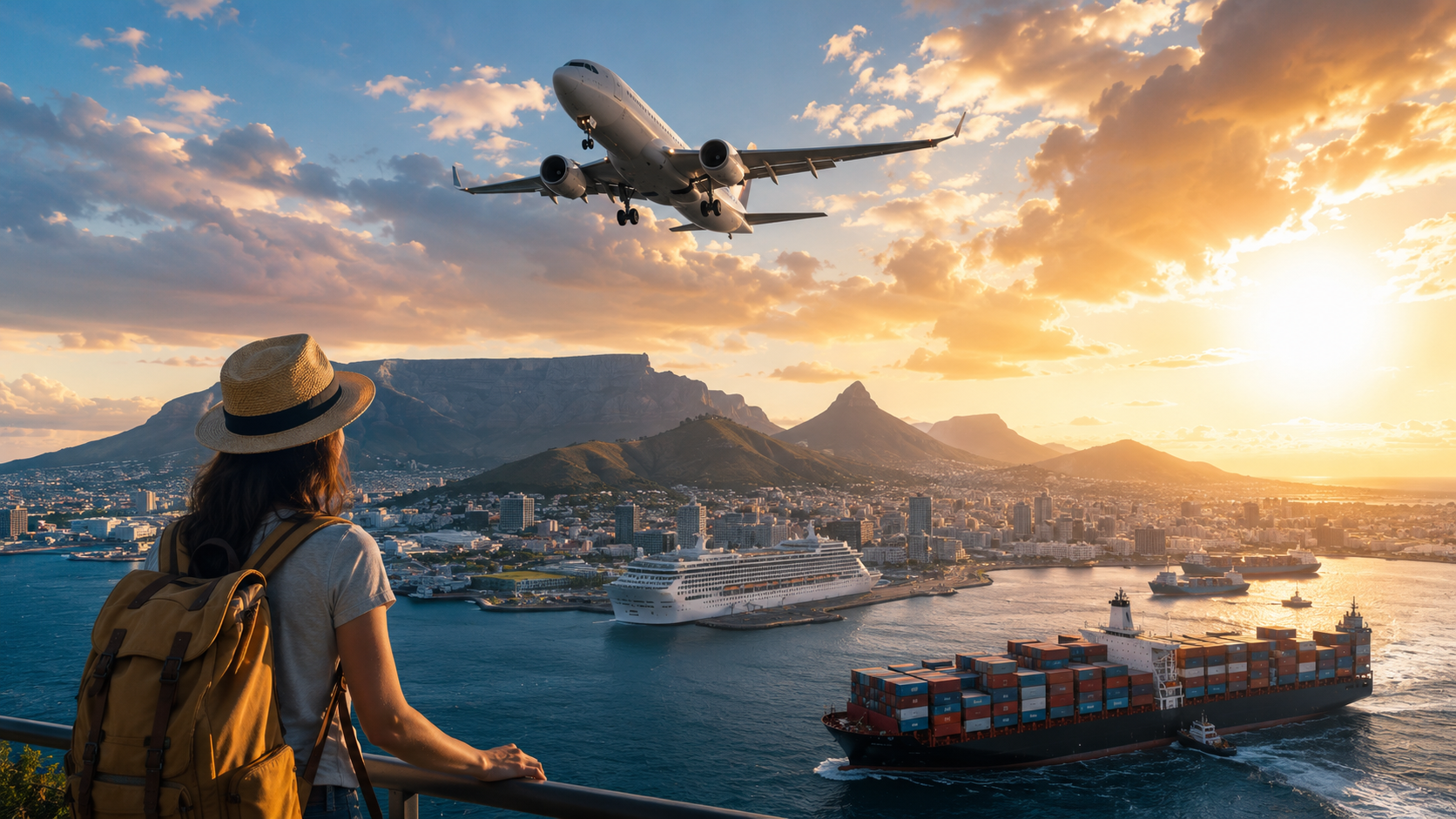
Imagine a traveller flying from London to Cape Town.
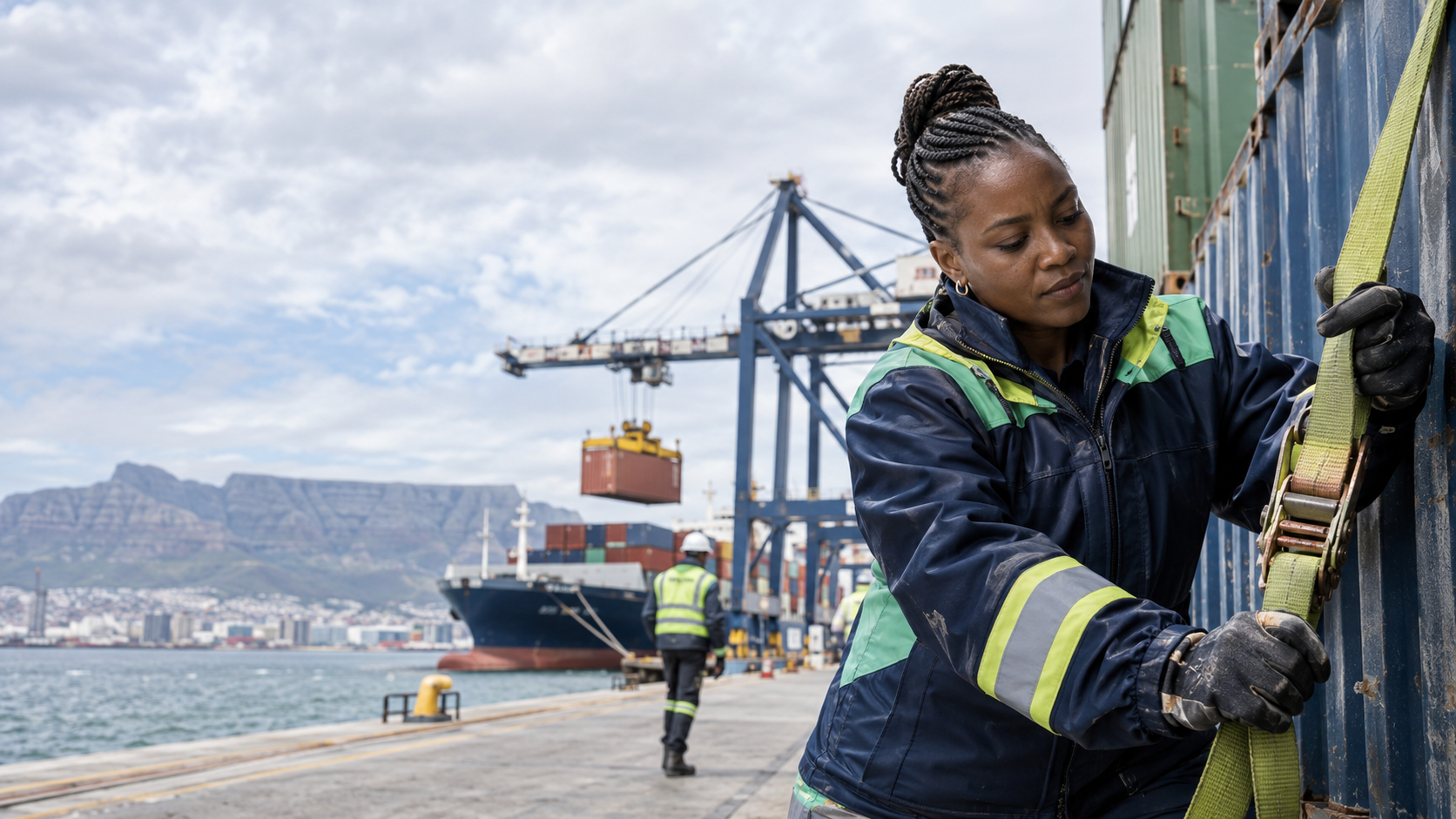
Before that person even arrives in South Africa, their journey has already touched airlines, airports, fuel suppliers, booking platforms, payment networks, baggage handlers and transport companies. Once they land, the economic footprint expands further through hotels, restaurants, car rental businesses, tour operators, attractions, shops and countless local suppliers working behind the scenes.
A single trip can spread spending across a surprisingly large network of businesses.
Now multiply that by millions.
That is when travel becomes macroeconomics.
According to the World Travel & Tourism Council, travel and tourism contributed about US$11.6 trillion to the global economy in 2025, equivalent to roughly 9.8% of global GDP, while supporting around 366 million jobs: about one in every nine jobs worldwide.
Those numbers make one thing clear: tourism is not sitting on the edge of the global economy. It is embedded inside it.
Airlines sit at the centre of the story
Airlines are often the most visible part of the travel industry, but they are also one of the most sensitive to what is happening in the wider world.
A rise in fuel prices changes the cost of operating a flight. Conflict can close airspace and force aircraft onto longer routes. A weaker economic outlook can affect travel demand. Currency movements can make international holidays feel suddenly cheaper or more expensive depending on where someone is travelling from.
That is why aviation can act as a useful window into the wider economy.
The latest data from the International Air Transport Association shows that global passenger demand fell 1.7% year-on-year in June 2026, while Africa moved in the opposite direction, recording 3.8% growth. IATA linked part of the global weakness to softer domestic travel in major economies and disruption in the Middle East, while also highlighting the pressure that higher fuel prices can place on airlines.
In other words, the price and availability of a plane ticket can contain traces of much bigger global stories, from energy markets and geopolitics to consumer confidence and economic growth.
Oil comes along for the journey
Modern aviation still depends heavily on jet fuel, which means events thousands of kilometres away from a holiday destination can affect the economics of getting there.
When oil prices rise, airlines face higher operating costs. When conflict forces aircraft to avoid certain parts of the world, flights can become longer and more fuel-intensive. IATA expects global air-travel growth to slow significantly in 2026 and has highlighted higher energy costs and Middle East disruption as important pressures on the industry.
This is one reason travel and geopolitics are more closely connected than they may appear.
A political crisis can become an energy story. The energy story can become a transport story. And eventually, the transport story can become a tourism story.
When visitors arrive, money arrives too
International tourism has another important economic feature: visitors bring spending into the destination.
They pay for accommodation, meals, transport, entertainment and experiences using money earned elsewhere. Economists treat this as a form of services export.
A safari in the Kruger National Park cannot be put into a shipping container and sent to Germany. Instead, a German visitor travels to South Africa to experience it.
Economically, however, the effect is similar. Money from another country enters the local economy in exchange for a South African service.
Globally, international visitor spending reached approximately US$2.02 trillion in 2025, according to the World Travel & Tourism Council.
That is a remarkable amount of economic activity generated simply by people crossing borders.
South Africa has a lot riding on travel
For South Africa, this story matters.
International tourist arrivals reached 10.5 million in 2025, surpassing both 2024 and pre-pandemic 2019 levels, according to South African Tourism.
But visitor numbers only tell part of the story.
The World Travel & Tourism Council estimated that travel and tourism would support around 1.9 million South African jobs in 2025, while contributing approximately R660 billion to the economy.
And tourism spending rarely stays within the walls of a hotel. A visitor to Cape Town might spend money at a restaurant, visit a wine farm, hire a driver, buy local products, book a tour and pay an entrance fee at an attraction. Each of those businesses, in turn, relies on suppliers, staff and services of its own.
The economic footprint keeps spreading.
The currency connection
Travel also connects countries through currencies.
When a South African travels to Europe, rands ultimately have to be exchanged for euros to pay for accommodation, meals and other expenses. When a European visitor comes to South Africa, the flow runs in the opposite direction and foreign spending enters the local economy.
At the level of a single holiday, this barely registers. Across millions of travellers, however, tourism becomes part of the broader flow of money moving between countries.
Tourism does not determine where a currency moves. Exchange rates are influenced by much larger forces, including interest rates, trade, inflation and global sentiment.
But travel is still one strand in that much larger web.
Travel moves people, and people move money with them.
When everyone wants to visit the same place
Tourism can also create an unusual economic problem: sometimes there can be too much of it.
Destinations such as Barcelona, Venice, Amsterdam, Santorini and Kyoto have all wrestled with what has become known as overtourism.
Large numbers of visitors can support local businesses and employment, but they can also put pressure on housing, public transport, water, infrastructure and local communities. Apartments can shift from long-term housing to short-term accommodation. Restaurants can become more focused on visitors than residents. Popular public spaces can become overcrowded, and local prices can start to change.
It reveals an interesting contradiction.
Something that creates enormous economic value can also create economic pressure when too much activity becomes concentrated in one place.
Airports are economic engines
Airports provide another example of the hidden economics of travel.
A major airport is effectively a small city. Beyond pilots and cabin crew, it supports engineers, security staff, retailers, caterers, ground handlers, cleaners, air-traffic controllers, logistics companies, customs officials, car rental businesses and nearby hotels.
Thousands of jobs and businesses can depend directly or indirectly on the flow of people through a major aviation hub.
When passenger numbers rise or fall sharply, the effects can reach much further than the departure lounge.
Travel can tell us how people reel
There is another reason economists pay attention to tourism.
Travel can offer clues about confidence.
A household that feels secure about its finances may be more comfortable booking a holiday. A business expecting growth may send employees to international conferences or meetings. When uncertainty rises, discretionary travel can sometimes be postponed.
That does not make tourism a perfect measure of economic confidence. People often continue to prioritise travel even when conditions are difficult.
But changes in bookings, hotel occupancy and passenger traffic can reveal something about how households and businesses are behaving.
What happens when travel stops?
The world saw the most extreme version of this during the COVID-19 pandemic.
Aircraft were grounded, hotels emptied, airports went quiet and tourist cities lost visitors almost overnight.
The shock demonstrated something that had previously been easy to overlook: the movement of people is part of the infrastructure of the global economy.
The recovery since then has been dramatic. By 2025, travel and tourism’s economic contribution had reached a new global high, while international visitor spending also set a record.
It was a striking reminder of how quickly economic activity can disappear when people stop moving, and how widely those effects can spread.
The bigger picture
We usually think about travel in terms of destinations, experiences and memories.
But behind every trip sits an enormous economic ecosystem.
Fuel has to be refined. Aircraft have to be operated and maintained. Hotels need staff and suppliers. Restaurants buy produce. Airports need infrastructure. Governments collect taxes. Local businesses gain customers they may never otherwise have met. Foreign money moves across borders and enters new economies.
And the entire process begins with something remarkably ordinary: someone deciding to go somewhere.
A holiday may feel personal.
At a global scale, it is anything but.
Because when millions of people pack their bags, board planes and cross borders, they are not only travelling through the world economy.
They are helping to move it.