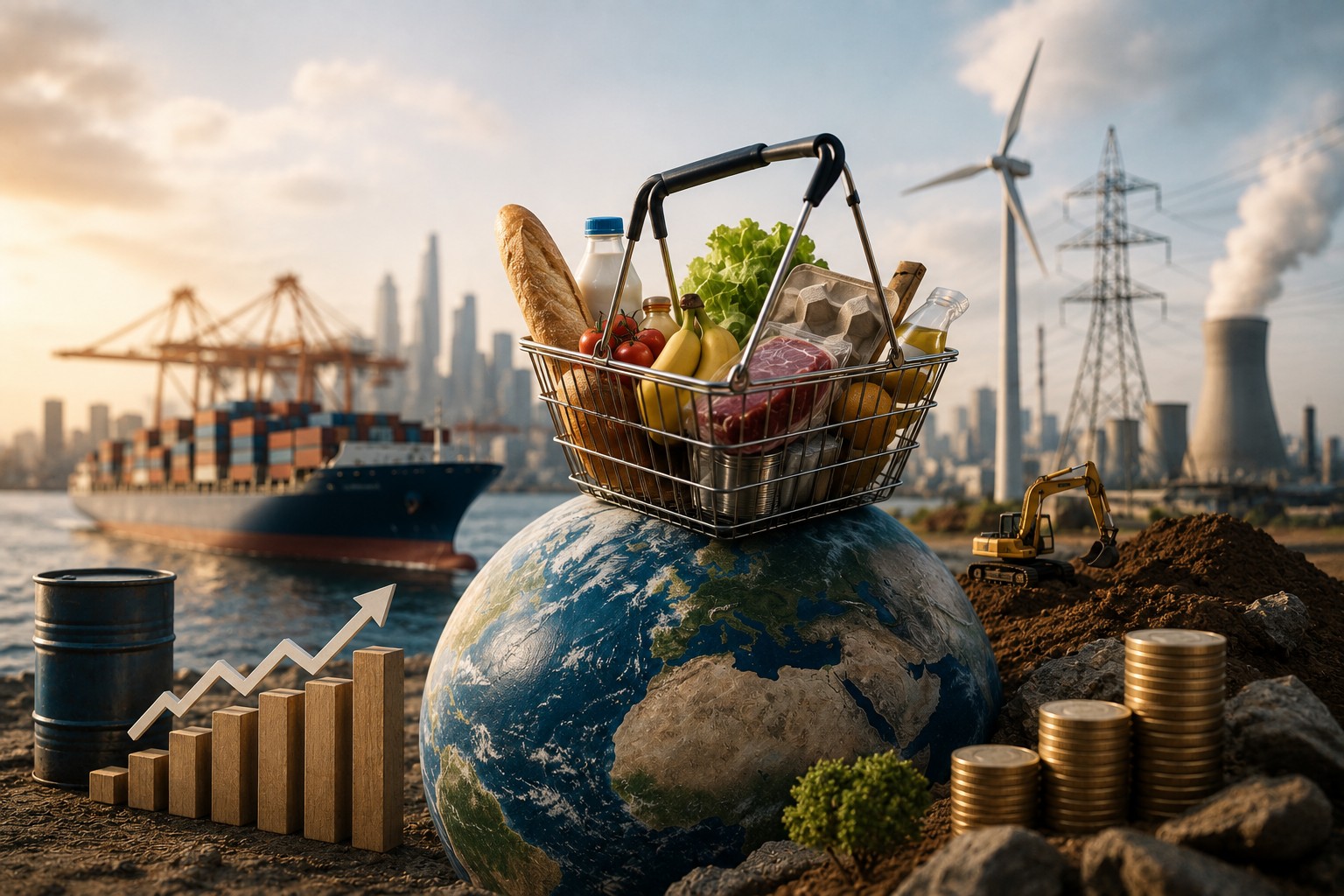
Have you noticed that “normal” doesn’t cost what it used to?
A cup of coffee. A weekend getaway. A new smartphone. A streaming subscription. A loaf of bread.
It’s easy to blame inflation whenever prices rise. But inflation is only part of the story. The truth is far more interesting. The world itself has become a more expensive place to produce, transport, power and deliver almost everything we use.
Behind the price tag lies a much bigger story: one shaped by global trade, energy, technology, geopolitics and even the weather.
The end of the cheapest wins
For decades, businesses focused on one thing above almost everything else: cost. Manufacturers built factories where labour was cheapest. Products travelled across multiple continents before reaching store shelves. Supply chains became incredibly efficient. But they also became incredibly fragile.
The COVID-19 pandemic exposed just how vulnerable this system had become. Factory shutdowns, shipping delays and shortages showed businesses around the world what happens when even one link in a global supply chain breaks. Since then, many companies have started rethinking their approach.
Instead of building the cheapest supply chains, they’re building more resilient ones, even if that costs more. Governments have also encouraged businesses to diversify where they manufacture critical products and source important materials.
Resilience, it turns out, isn’t free.
Energy powers almost everything
Every product has an energy story. Energy powers factories. It moves ships across oceans. It fuels trucks delivering goods to warehouses and stores. It keeps data centres running and refrigerators cold. When energy becomes more expensive, or less predictable, the effects spread throughout the economy.
Recent geopolitical tensions have once again highlighted how closely the global economy remains tied to energy markets. Higher energy costs don’t only affect fuel prices; they increase the cost of making, moving and storing countless everyday products.
The world is building again
For years, businesses focused on efficiency. Today, they’re also focused on resilience. Countries are investing in new electricity grids, renewable energy, battery storage, semiconductor manufacturing, ports, railways and digital infrastructure.
At the same time, artificial intelligence is driving demand for new data centres and electricity at an unprecedented pace. These investments are essential for the future, but building anything on a massive scale requires materials, skilled workers, equipment and time.
All of those come at a cost.
Climate has become an economic story
Climate change is often discussed as an environmental issue. Increasingly, it’s also an economic one. Extreme weather can damage crops, disrupt transport routes, affect water supplies and increase insurance costs. A drought in one part of the world can reduce agricultural output. Floods can delay manufacturing. Wildfires can interrupt supply chains.
These events don’t stay local for long.
In an interconnected global economy, disruptions often ripple across borders.
The cost of an uncertain world
Businesses like certainty. It helps them plan, invest and grow. But today’s world has become more unpredictable.
Trade tensions. Geopolitical conflicts. Changing regulations. Disruptions to key shipping routes. Each adds another layer of complexity. When uncertainty rises, businesses often build in extra capacity, hold larger inventories or diversify suppliers.
These decisions make supply chains more resilient but they also increase costs. International organisations such as the IMF and OECD have warned that rising trade fragmentation and geopolitical uncertainty are placing additional pressure on global growth and prices.
Why it matters in South Africa
South Africa doesn’t operate in isolation. We import technology, machinery, fuel and countless everyday products. We’re also connected to global trade through our exports of minerals, agricultural products and manufactured goods. That means international developments can eventually influence local businesses and consumers.
- If shipping becomes more expensive…
- If energy costs rise…
- If global supply chains change…
- South Africa often feels those effects too.
Sometimes the connection is immediate. Sometimes it takes months. But in today’s economy, distance doesn’t provide much insulation.
Does this mean prices will keep rising forever?
Not necessarily.
Inflation naturally rises and falls over time. Commodity prices move in cycles. Technology can reduce costs.
Competition encourages efficiency.
But many economists believe some of the structural changes we’ve seen over the past few years, from more resilient supply chains to increased investment in energy and infrastructure, are likely to remain part of the global economy for years to come.
That doesn’t mean everything will become permanently more expensive.
It does suggest that the era of producing almost everything in the cheapest possible place, with little room for disruption, may be giving way to a different model: one that places greater value on resilience, security and reliability.
Looking beyond the price tag
When we see prices rise, it’s natural to ask, “Why is this more expensive?”
The answer is rarely just inflation. It might be a longer shipping route. A more resilient supply chain. Higher energy costs. A new factory built closer to home. Investment in cleaner technologies.
Or simply the cost of preparing for a world that has become more complex and less predictable. The price we pay for many everyday products reflects more than the item itself. It reflects the changing world behind it.
And understanding that world helps explain why “more expensive” has become one of the defining economic stories of our time.